● Berlin
John Noel Smith
One Line
Opening: Thursday, November 6, 5 – 8 p.m.
6.11. – 10.1. 2026
Works
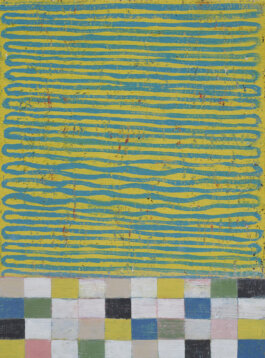
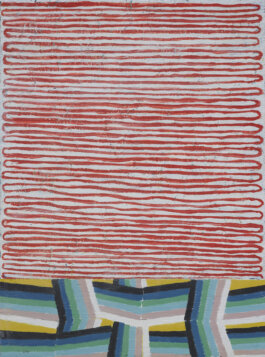
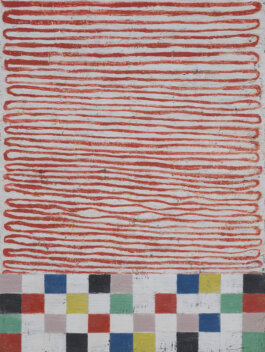
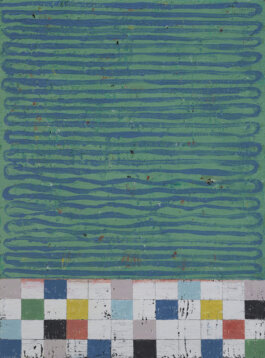
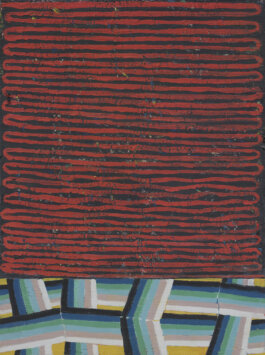
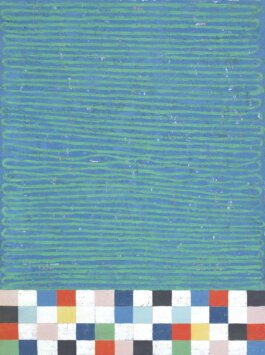
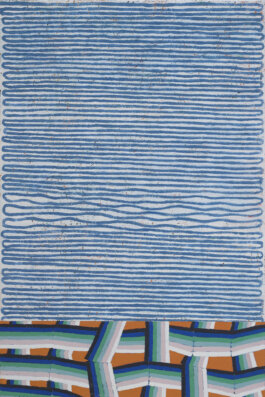
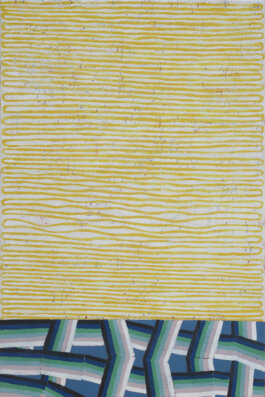
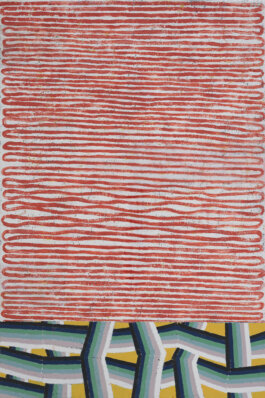
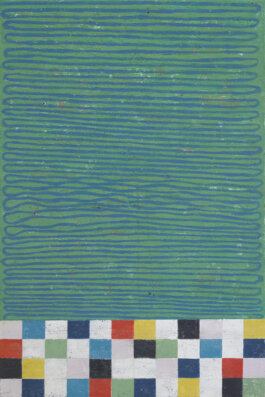
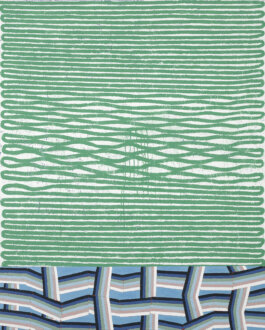
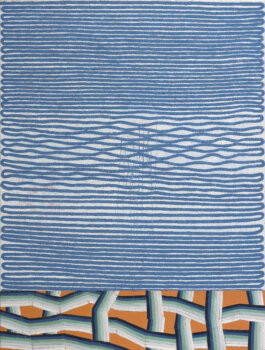
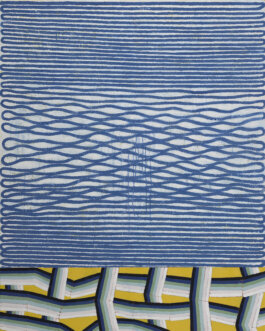
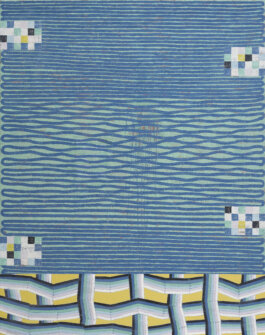
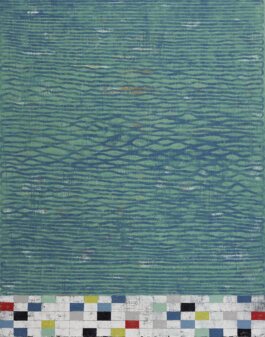
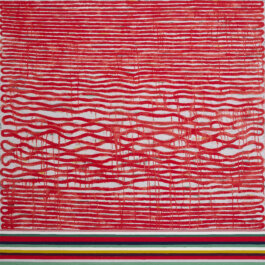
Several years ago, John Noel Smith mentioned having thought of painting as a “sensual concrete form of knowledge”, and the senses have consistently been at the centre of the methodology and substance of his work.
The surface of each painting is certainly like a skin:
densely layered, lustrous, tactile, vibrant. More, his paintings offer a particularly persuasive argument for Maurice Merleau-Ponty’s idea that we do not so much look at a painting as with it or, as Merleau-Ponty put it, “according to it.” In engaging with a painting, that is to say, we take on or adopt the sensibility of the painter, and we do so not on a detached, cerebral level, but in an enmeshed, bodily way directly informed by our own empirical experience of the world, and as beings integral to that world. That is, rather than functioning in terms of representations viewed in a theatre of the mind, each individual consciousness is wholly immersed in, and part of, the physical world. We relate to the painter’s perceptual and conceptual processes in a direct, bodily way, via what Merleau-Ponty terms “a secret visibility.” In retrospect, a sense of the corporeal infuses Smith’s work from the beginning, collapsing any notional space between observer and observed, thinker and thought. His description of himself as
“a hard-core abstractionist” accords with his rejection of representation and the conventional representational model.
An habitual criticism of abstraction posits it as a pursuit of diminishing returns, a specialised looking inward, preoccupied with what are dismissively termed formal values. This presumption is mistaken. Smith’s paintings, for example, are clearly concerned with the world, while recognising that he apprehends and conceptualises the world
within the context of his own being. In a 1967 interview with James T Valliere, Willem de Kooning commented, apropos artists evaluating and appreciating each other’s work: “It’s hard to see something that’s different from your work.” That is, artists exist within their own work, so to speak, their work is the way they apprehend the world.
Perception and cognition are inevitably embodied.
Smith’s paintings can be regarded as an interface, formed and existing in that ambiguous, in-between space generated by the self’s being within and of the world.
His approach crystallised when he first went to and then settled in Berlin, in 1980, living and working there for more than two decades. As an Irish exile, he found his sense of self was foregrounded in his Irishness, and his reflections on identity drew in a number of emblematic signs and symbols, from the linear inscriptions of the Ogham alphabet to shamrock. Over time (to simplify the process a little), these broadened into less culturally specific chequerboard grids and cross-hatched patterns, surely metaphors for modes of thought and communication. And, metaphorically, the development could be viewed as extending from the divided island of Ireland to other divisions and polarities, globally. Divisions, duality and differences run through his paintings, in which alternative or even contrasting systems meet. But, as the artist has pointed out, rather than juxtaposing fragments, the paintings synthesise wholes from disparate elements, they live with difference, so to speak. Something that is more evident than ever in the Obstacle Course works, in which a continuous, labyrinthine line threads its way through the compositional expanse.
Look carefully and you will find that these paintings have a particularly wide metaphorical reach.
Aidan Dunne
(The artist is quoted from a conversation with
Patrick T Murphy, 2002; Willem de Kooning from The Partisan Review, Autumn 1967;
works by Maurice Merleau-Ponty referred to are The Phenomenology of Perception, 1945 and The Visible and the Invisible, 1964).
John Noel Smith ⇒